

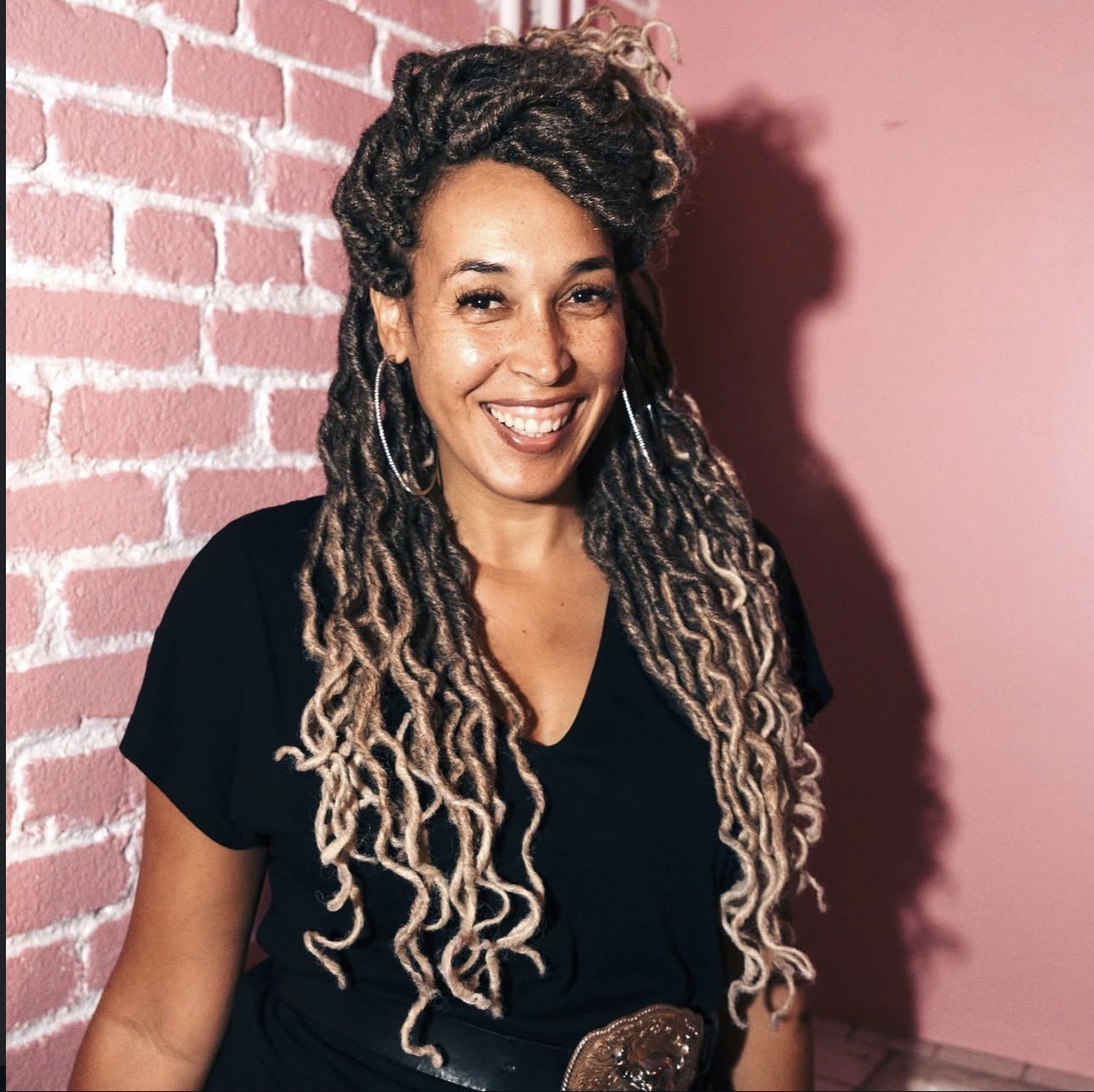
 In honor of Prematurity Awareness Month (November), we sat down with Colleen Lovejoy, Founding Director, Care Consultant, and Sound Therapist of Sugar Heal Gang (SHG), to talk about what it truly takes to support birthing families — before, during, and after birth. SHG is a collective of Black and Indigenous healers based in Los Angeles, CA, working at the intersection of culture, care, and community. Since 2020, SHG has provided health and wellness support to families through high-quality, culturally rooted, holistic birthing services, training workshops, and cultural gatherings.
Can you share the vision behind Sugar Heal Gang and how cultural healing shows up in your work?
Black maternal health wasn’t something I studied. I didn’t start out thinking, I’m getting into Black maternal health. I had an experience and realized it wasn’t the way it was supposed to be. It wasn’t rooted in cultural healing or designed to empower women. Those are things you learn later, but you know when something isn’t right.
My birthing experience felt cold, isolating, and confusing. It felt like the people who held the knowledge were looking down on the very people who were trying to give birth and bring new life into the community.
And when my friend got pregnant, I told her, “It’s going to be awful and you’re probably going to have to keep switching doctors.” Then I heard myself and thought, Wait a second…
What if we could surround her? What if we could gather resources around her so she could create a birth plan and a birth team, and have what she wanted? What would feel like love? What would actually feel supportive and empowering? It really was that simple.
We didn’t even have words for it back then. We just created a care plan and came together and said, who do we know who brings healing? This person knows nutrition. This person can offer spiritual care. My sister knows a midwife — how much does she charge? Can we raise that? It was really just calling people together.
And once we did it, we knew we were on to something.
Because it was the care I wish I had. The support I wish I had. You don’t know what you’re missing until you’ve lived through it. And you can’t create something different until you actually create something different, and then you know: This is it.
The more options that exist — and the more organizations and people create new models of care — the more it will be talked about. For a long time, people just accepted what was, because… what was the alternative?
What does “The Village” mean in your approach to caring for birthing people?
I think of that old saying, it takes a village to raise a child, but really, it takes a village to raise a family. To help a family grow.
I don’t think it’s a coincidence that so many breakups happen when kids are toddlers. In this country, there’s no free childcare and no guaranteed maternity or paternity leave. I really wonder if support like paid leave and universal childcare existed whether divorce rates among parents of kids ages zero to five would go down.
I keep seeing this conversation about a loneliness epidemic and it shows up for birthing families, too. People are isolated. On a good day, you might be able to hold it all together, but nobody can get sick, nobody can lose a job, nobody can have a hard month financially. There’s no backup.
You can’t even really give birth without thinking, Do I have time off? Do I have savings? Do I have support? It’s heavy.
So, I think the village has to start with us finding each other again. It’s generational knowledge, people who’ve given birth telling you, be ready.
You need community. And if you don’t have family, you have to build it. There are organizations, spaces, and people where you can find your village.
Looking back, I don’t think I had my village set up. I thought I had friends, but I didn’t know how to call on them. I didn’t know how to ask for help, and it created so much unnecessary stress.
I also think proximity education is so interesting. I don’t hear people talking about it. We’re taught to go to the college with the specialty you want, and then you go work, but no one talks about what you give up when you move away from your friends and family.
It’s easy when there are no kids in the picture. But once you’re giving birth — especially if you have complications — everything has to go right, or things can become really hard really fast.
It can become life-threatening very quickly. And it can threaten the life of the baby, too, especially when we’re talking about preterm birth.

How does your collective help families coping with or recovering from premature birth?
One of the first things we keyed in on was exhaustion.
The way exhaustion often shows up in pregnancy is through preterm contractions or bleeding. For us, there’s a direct connection. So anytime we see preterm symptoms, the first question is always: How do we get her to rest? What would it take?
Because they’re working. They have partners. Their partners have expectations. They have other children. And resting — real rest — is not something our culture values. Not U.S. culture, and especially not Black U.S. culture.
So, we ask: Can she take time off? What income would she lose? Is there childcare support? If there are other kids in the house, can we bring help in so she can be on her feet less?
It’s something we do very intentionally. It’s actually very uncommon for our home-birth clients to experience preterm birth. They may show symptoms, but we intervene quickly because we recognize the connection between exhaustion and preterm symptoms.
At Sugar Heal Gang, and with efforts like the Abundant Birth Project, it became clear that so much of what families were facing came down to exhaustion and stress.
I remember when I first learned about the Abundant Birth Project — and I could be remembering this wrong — but I recall seeing a study where they started giving guaranteed income to Black women, and when they did that, their rates of preterm birth went down.
Because people could finally afford to take maternity leave. They could step back when high-risk symptoms showed up. They could rest.
And it made me think: Did you get a break? Did you get nutritional support? Did you get help to reverse what was happening in your body?
Even if it was just one bill being paid — not worrying about the car note for two months — simply having that money, with no strings attached, lowered stress. And when stress went down, preterm birth rates went down, too.
In Western medicine, there are things we accept as facts — and then there are things that get dismissed as “just correlations.” Stress is one of those things that’s actually understood. We know that if someone wants to avoid another stroke or heart attack, they have to reduce stress. That connection is widely accepted.
So why isn’t it more widely understood that exhaustion can trigger preterm birth symptoms?
Women are working. They have to work. And Black women — and women of color — have always been working the hardest.
And when we talk about preterm awareness, I want to say clearly: when the body is spotting or contracting early, it’s communicating something. These are signals of exhaustion and dehydration. The body speaks.
The first response is always rest and hydration. And then, we bring in supportive care. In my work, that includes tuning-fork sound therapy.
When the body and the baby are out of harmony, they’re exhausted. And we use sound to help rejuvenate the body — to bring the baby and the mother back into balance. It’s almost like the baby says, I guess I’m supposed to come out, and we’re like, no, baby — calm down. Get comfortable. Stay.
I call it AccuVibrational sound therapy, and it’s unique to my work. I’ve created a training program to teach doulas and midwives how to use tuning forks to do it.
I’ve done it about twenty times, and almost every time, symptoms slow or stop — bleeding, contractions, or both.
From there, we send in the acupuncturist. We ask: What would it take for her to rest? Does she have other kids? Can we send a babysitter? Is she working? Can she afford to take time off? Do we need to provide money so she can rest?
It’s rest, hydration, sound therapy, and acupuncture — all working together.
A doctor may not recommend these things, but that’s what’s unique about what we do. Our midwives will say, Get the tuning forks on her, and the acupuncturist comes in with the needles. There are known acupressure points to help with spotting and contractions. The knowledge exists — it’s just not widely recognized in the U.S. medical system.
And if you think about holistic care, we accept breathing, stretching, water, and massage — but why stop there? There’s so much knowledge about bringing the body back into balance.
When athletes run marathons, people line the streets with water and support. When quarterbacks get injured, teams bring in every technology available to keep them healthy and on the field. Why don’t we do that for women?
I’ve had women whose partners are professional athletes say, I’ve had tuning fork therapy before. And then I’ll meet yoga teachers in Los Angeles who’ve never even seen one. I’m like — how is this not everywhere?
What we’ve been finding is that home-birth clients who receive the full scope of care, including preventative care, often don’t even develop symptoms. At first, we wondered if we were just getting low-risk clients, but at this point, we’ve done it long enough to see that the prevention is working.
And we approach things the same way with preeclampsia. Our doula will go into your kitchen, remove what isn’t helping, and replace it with what your body needs. Then she teaches you how to cook it.
This is what full care looks like. It’s prevention. It’s education. It’s nourishment. It’s postpartum support. And it takes resources.
People ask why we spend $25,000 to $30,000 on a holistic birth. But then we ask — how many of those lower-cost births still involved trauma? How many ended in hospital transfers? A lot of birth centers still send many people to the hospital because they only take low-risk patients to begin with. The high-risk pregnancies are still happening — they’re just managed elsewhere.
Can you share a moment when you witnessed community support transform someone’s birth journey?
We’re working with a family right now — their baby is in the hospital. He’s about three pounds, and he’s gaining ounces. I actually check in with his mom to ask, How many ounces today? Did he gain another one?
In cases like that, we often get involved after the fact. But one of the most important things we’ve learned about supporting NICU families is that many mothers completely deny themselves healing until their babies are home.
When I first started doing this work, I would throw every resource at them — postpartum acupuncture, nutrition support, bodywork — and nobody would engage. And I had to stop and ask, what’s happening with this mother that she can’t recognize her own need to heal?
She just gave birth, whether her baby is in the NICU, whether she experienced a loss, or whether the baby is home. But if her baby isn’t well, she will often deny herself care.
So now what we’ve learned is patience. It’s not about saying, it’s been two months and she hasn’t engaged. It’s about continuing to check in. Because when she finally starts to unfreeze — when she realizes that she also gave birth and that her body needs care — that need doesn’t go away just because time has passed.
And when a loss is involved, sometimes mothers won’t engage in healing at all. They punish themselves, even when resources are available.
So, our role is simply to stay present. To keep checking in. To support families even when mothers can’t yet receive that support themselves.
Many families feel alone in NICU or preterm experiences. What practices help reconnect them to community care?
Having patience and continuing to check in really matters. And that’s something Mighty Little Giants does well, their support groups that remind moms they’re not alone.
Because one of the things we see over and over is that mothers blame themselves for preterm births or losses. They truly believe they harmed their babies. And it’s heartbreaking to watch them carry that.
That’s why support groups are so powerful. They give mothers a place to release the guilt, to be seen, and to heal together.
When we’re supporting a NICU family, one of the most important things we focus on is added lactation support.
NICU staff are truly earth angels. They take care of the most vulnerable babies in the world. But sometimes, parents are treated as if they’re a threat to their baby’s health — because of germs or exposure — and I understand that it’s complicated.
At the same time, there are moments when what the baby needs most is a mother’s milk and her arms. I’ve seen babies start to improve when that connection finally happens.
Being separated from your baby is its own kind of torture — for both of you.
I watched a friend go through this with her preterm baby. His condition kept getting worse, and when she finally insisted on holding him despite the hospital’s guidance, he started getting better.
But it also made me think: how heartbreaking is it that the thing he needed most was his mother and he had been denied that?
What do you want Black families to know about seeking culturally affirming perinatal support?
To have a non-traumatic birth, you have to be comfortable. If you’re not comfortable where you’re receiving prenatal care, you’re not going to be comfortable giving birth there.
Find the people and places where you feel safe — because that’s where your birth will likely be the least traumatic for you and your baby.
Even going to the hospital is uncomfortable. You leave your home. You get dressed. You drive across town. You sit in a waiting room while you’re pregnant. That alone is stress on the body.
And a lot of people think, I put it in my birth plan — but once you get in the door, the system takes over. You’re told to change clothes, follow procedure, move along.
These systems aren’t built around your comfort — they’re built around efficiency and billing. People think, I saw another Black woman there, so I’ll be safe. But that doesn’t change the system she’s operating in.
And then you experience something different, like acupuncture, where the first question is, how are you sleeping? Are you waking up at night? How does your body feel?
Someone is listening. Someone is paying attention. Every detail matters because every sign tells a story about how your body is functioning.
That’s what drew me to AccuVibration. I wanted to understand how the body communicates and how to read those signals.
For example, in traditional Chinese medicine, spotting isn’t “nothing.” If you’re bleeding when you shouldn’t be, that’s your body signaling exhaustion. In many Asian traditions, it’s called womb fatigue — and the remedy is rest.
But here, we’re told, that just happens sometimes. And I think that’s part of the problem.
How can people support or stay connected to your work?
Thank you so much. You can learn more about us at SugarHeal.com.
We’re currently fundraising for our Sugar Heal Family Garden in South LA — a healing space where families come together to garden, harvest, host gatherings, and pick flowers. It’s also a place for birth workers to restore themselves.
When you do this work, you see yourself in the people you serve. Many of us come to this work from our own birth trauma or hard experiences. So, we believe deeply in caring for birth workers —in rest and in having space to process. And we create those spaces not just for families, but for the people who support them.
Showing 1 reaction