

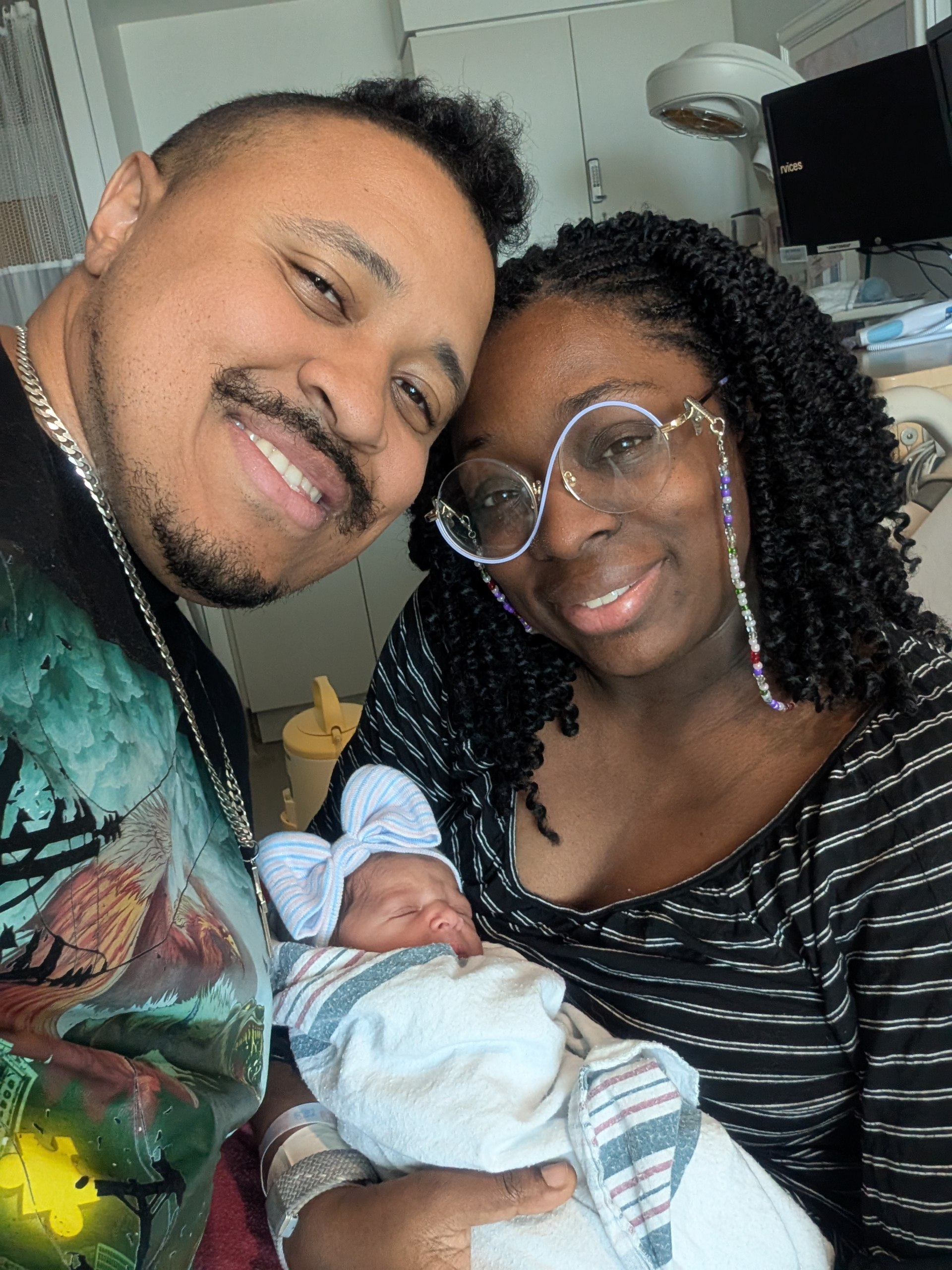
Adam and Key Provinchain share their journey into parenthood and the joyful birth of their baby girl.
Family Story
Can you tell us a little about your family and what this pregnancy or birth journey meant to you?
Both of us grew up in and around South LA. We met in 2015 (right after college), married in 2018, and had our first child in February of this year.
Key works as a public health director, while Adam works as a Mechanical Engineer. We're both blerds, and we really enjoy spending time together.
We knew we'd waited a little while to have kids, but we wanted more stability in our lives before parenthood.
Both of us grew up in and around South LA. We met in 2015 (right after college), married in 2018, and had our first child in February of this year.
Key works as a public health director, while Adam works as a Mechanical Engineer. We're both blerds, and we really enjoy spending time together.
We knew we'd waited a little while to have kids, but we wanted more stability in our lives before parenthood.
When you think back on your birth experience, what moments stand out as the most meaningful or joyful?
Key: My husband standing up for me and advocating for me during the delivery, especially during labor when I was too medicated to necessarily comprehend all the sudden changes and the flurry of activity.
I trusted him to have my back the whole time. Holding our daughter immediately after my C-section was incredible.
Adam: Yeah, I think holding our daughter and cutting the umbilical cord was more emotional than I expected it to be.
That's probably tied for "most joyful" with actually seeing you back in the hospital room after your surgery. Seeing you safe felt like the first time I could breathe again.
Key: My husband standing up for me and advocating for me during the delivery, especially during labor when I was too medicated to necessarily comprehend all the sudden changes and the flurry of activity.
I trusted him to have my back the whole time. Holding our daughter immediately after my C-section was incredible.
Adam: Yeah, I think holding our daughter and cutting the umbilical cord was more emotional than I expected it to be.
That's probably tied for "most joyful" with actually seeing you back in the hospital room after your surgery. Seeing you safe felt like the first time I could breathe again.
What did it feel like to be surrounded by support during your pregnancy and birth?
Key: Adam was with me at nearly every perinatal visit, and we discussed pregnancy experiences with several friends and family members.
We intentionally kept our support group small during the actual birth; we were concerned about feeling overwhelmed by too many concerned supporters.
Adam was the only one in the room with me during the delivery, but our local family visited in the days afterwards, before we were discharged
Key: Adam was with me at nearly every perinatal visit, and we discussed pregnancy experiences with several friends and family members.
We intentionally kept our support group small during the actual birth; we were concerned about feeling overwhelmed by too many concerned supporters.
Adam was the only one in the room with me during the delivery, but our local family visited in the days afterwards, before we were discharged
Care and Support
Who were the people that supported you during your pregnancy and birth (family, doulas, partners, community)?
Key: I participated in an expectant mothers' group that met weekly online and the Black Maternal Health group in Los Angeles.
Adam: Key introduced me to the AAIMM Expecting Fathers' Group, which also met weekly online.
Both: I think we also talked to a dozen of our friends and maybe a half dozen family members about their pregnancy experiences. And a few coworkers as well.
Key: I participated in an expectant mothers' group that met weekly online and the Black Maternal Health group in Los Angeles.
Adam: Key introduced me to the AAIMM Expecting Fathers' Group, which also met weekly online.
Both: I think we also talked to a dozen of our friends and maybe a half dozen family members about their pregnancy experiences. And a few coworkers as well.
How did that support shape your experience?
Both: The online groups were immensely helpful in explaining the possibilities. Going into a first-time pregnancy, you don't know what you don't know, and it's useful to hear common struggles and how to avoid them. They also explained the concept of a birthing plan and provided a template for us to fill out.
Key: That group was especially useful once I was on leave from work ahead of the delivery; pregnancy felt isolating and there were so many unknowns to navigate.
Adam: I know we also appreciated hearing from friends who'd had children more recently. Hearing from someone who gave birth 6 months ago about what they wish they'd known or what they did well was phenomenal at putting things into perspective.
Both: The online groups were immensely helpful in explaining the possibilities. Going into a first-time pregnancy, you don't know what you don't know, and it's useful to hear common struggles and how to avoid them. They also explained the concept of a birthing plan and provided a template for us to fill out.
Key: That group was especially useful once I was on leave from work ahead of the delivery; pregnancy felt isolating and there were so many unknowns to navigate.
Adam: I know we also appreciated hearing from friends who'd had children more recently. Hearing from someone who gave birth 6 months ago about what they wish they'd known or what they did well was phenomenal at putting things into perspective.
Were there moments where you felt particularly seen, heard, or respected in your care?
Key: When I expressed concern that my due date might not be my actual delivery date, that online group brought in a nurse practitioner to directly address that concern.
Adam: I think the hospital staff were receptive to my wife's instructions on pain management. They didn't make her tough it out or second guess her wishes; instead, they asked what she wanted and explained what that entailed.
Key: The pediatrician on staff at the hospital was also fantastic, and he referred us to a local Black pediatrician that we love.
Key: When I expressed concern that my due date might not be my actual delivery date, that online group brought in a nurse practitioner to directly address that concern.
Adam: I think the hospital staff were receptive to my wife's instructions on pain management. They didn't make her tough it out or second guess her wishes; instead, they asked what she wanted and explained what that entailed.
Key: The pediatrician on staff at the hospital was also fantastic, and he referred us to a local Black pediatrician that we love.
Joy and Healing
Black maternal health conversations often focus on disparities and challenges. What does joy mean to you in the context of your birth experience?
Adam: Ok, I want first dibs on this one. For me, joy was the feeling of holding my baby in my arms in the hospital room and then watching the medical staff wheel my wife, safe and sound from her surgery, back into our hospital room. I was incredibly nervous about her going through an emergency C-section, and that anxiety kept me from fully cherishing my daughter. Seeing Key healthy and safe let me find the joy in fatherhood.
Key: Oh absolutely, but joy also looked like those moments of shared sleep-deprived delirium both before and especially after the delivery. Sharing laughs and looks and jokes and meals while we held this new little life. It was important to find connection in that surreal environment. Our daughter was this precious bundle of joy, but also very new and very strange and very fragile, and the familiarity of my partner and a few items from home helped immensely.
Adam: Ok, I want first dibs on this one. For me, joy was the feeling of holding my baby in my arms in the hospital room and then watching the medical staff wheel my wife, safe and sound from her surgery, back into our hospital room. I was incredibly nervous about her going through an emergency C-section, and that anxiety kept me from fully cherishing my daughter. Seeing Key healthy and safe let me find the joy in fatherhood.
Key: Oh absolutely, but joy also looked like those moments of shared sleep-deprived delirium both before and especially after the delivery. Sharing laughs and looks and jokes and meals while we held this new little life. It was important to find connection in that surreal environment. Our daughter was this precious bundle of joy, but also very new and very strange and very fragile, and the familiarity of my partner and a few items from home helped immensely.
What did it mean for you to have a birth that felt safe and affirming?
Both: It meant not having to argue so hard to be heard, and having a medical staff that was attentive to needs, concerns, and struggles. We already mentioned things like pain management, but they also provided exceptional care and support after the delivery.
Key: I felt supported instead of overlooked or prematurely discharged. They brought in multiple lactation specialists, and the nurses and pediatricians were mostly attentive. I think there were one or two nursing rotations we weren't fans of, but they were pretty great on average. One nurse even came back off-duty just to see 'hi' and wish us well.
Both: It meant not having to argue so hard to be heard, and having a medical staff that was attentive to needs, concerns, and struggles. We already mentioned things like pain management, but they also provided exceptional care and support after the delivery.
Key: I felt supported instead of overlooked or prematurely discharged. They brought in multiple lactation specialists, and the nurses and pediatricians were mostly attentive. I think there were one or two nursing rotations we weren't fans of, but they were pretty great on average. One nurse even came back off-duty just to see 'hi' and wish us well.
Were there cultural traditions, family practices, or community connections that helped shape this joyful experience?
Key: Community connections via recent parent friends. Hearing their stories and experiences really established useful expectations. The aforementioned maternal/paternal groups were also great sources of support.
Key: Community connections via recent parent friends. Hearing their stories and experiences really established useful expectations. The aforementioned maternal/paternal groups were also great sources of support.
Reflection
Looking back now, what are you most proud of from your journey into parenthood?
Both: Communication and trust. We already talk to each other a lot and about nearly everything. We trusted each other implicitly to make decisions, keep each other informed, and have each other's best interests in mind. We talked about it so much, including via the birth plan, so there were fewer sudden decisions to catch us off guard. But in general, just the certainty of a partner who is walking with you and supporting you.
Both: Communication and trust. We already talk to each other a lot and about nearly everything. We trusted each other implicitly to make decisions, keep each other informed, and have each other's best interests in mind. We talked about it so much, including via the birth plan, so there were fewer sudden decisions to catch us off guard. But in general, just the certainty of a partner who is walking with you and supporting you.
What would you want other Black families preparing for birth to know or remember?
Key: Planning is crucial and helpful but the goal is a safe and successful birth experience. All the plans and requests, and practices are great, but the details of the delivery matter less than the end result. In this case, it's not all about the journey. It really is the destination.
Adam: I think the reminder that dads play a major role in pregnancy and the delivery. When she's tired from pushing or delirious from the epidural, someone has to be there to listen and respond to the medical team. The nurses complimented my wife on how involved I was during the delivery and I think it made them treat my wife a little differently.
Both: "Sleep when the baby sleeps" isn't real. You spend so much time watching them or checking in on them or making sure they're ok that you barely get time to sleep sometimes. Get used to being a little tired. Or a lot tired. Instead, "Sleep when the baby sleeps" mostly means "don't enjoy the few quiet moments you get when they're asleep too much," cause if you're tired and they're fussy or needy, that's a problem.
Key: Planning is crucial and helpful but the goal is a safe and successful birth experience. All the plans and requests, and practices are great, but the details of the delivery matter less than the end result. In this case, it's not all about the journey. It really is the destination.
Adam: I think the reminder that dads play a major role in pregnancy and the delivery. When she's tired from pushing or delirious from the epidural, someone has to be there to listen and respond to the medical team. The nurses complimented my wife on how involved I was during the delivery and I think it made them treat my wife a little differently.
Both: "Sleep when the baby sleeps" isn't real. You spend so much time watching them or checking in on them or making sure they're ok that you barely get time to sleep sometimes. Get used to being a little tired. Or a lot tired. Instead, "Sleep when the baby sleeps" mostly means "don't enjoy the few quiet moments you get when they're asleep too much," cause if you're tired and they're fussy or needy, that's a problem.
How can communities better support Black families during pregnancy and postpartum?
Both: I think a lot of people want to help, but the help we found the most useful was the least glamorous. Yes, getting a box of baby clothes or a pack of diapers was welcome, but having a friend come and walk our dog and feed our pets while we were in the hospital was invaluable. Bringing a meal to us in the days after the delivery was crucial. Helping get the house back in order after we got back. Those really helped us feel more like 'people' and less like bewildered new parents.
Key: I think there was a lot of outdated, well-intentioned advice that we had to politely accept but wasn't relevant to us, like breast milk vs formula, or what symptoms someone had thirty years ago.
Adam: True. Someone ordering delivery or groceries for us was clutch. I agree about the advice; what was more helpful was the recent advice or regrets, like the friend who warned us about bringing an air mattress instead of sleeping in a delivery room chair. That was something I wouldn't have even considered.
Both: I think a lot of people want to help, but the help we found the most useful was the least glamorous. Yes, getting a box of baby clothes or a pack of diapers was welcome, but having a friend come and walk our dog and feed our pets while we were in the hospital was invaluable. Bringing a meal to us in the days after the delivery was crucial. Helping get the house back in order after we got back. Those really helped us feel more like 'people' and less like bewildered new parents.
Key: I think there was a lot of outdated, well-intentioned advice that we had to politely accept but wasn't relevant to us, like breast milk vs formula, or what symptoms someone had thirty years ago.
Adam: True. Someone ordering delivery or groceries for us was clutch. I agree about the advice; what was more helpful was the recent advice or regrets, like the friend who warned us about bringing an air mattress instead of sleeping in a delivery room chair. That was something I wouldn't have even considered.
Do you like this post?
Showing 1 reaction